

Introduction
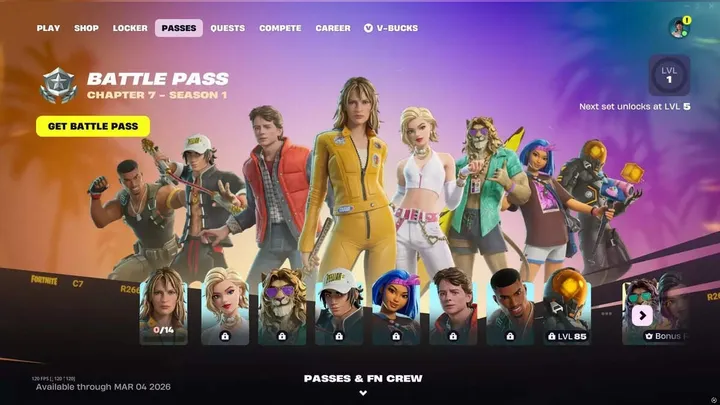
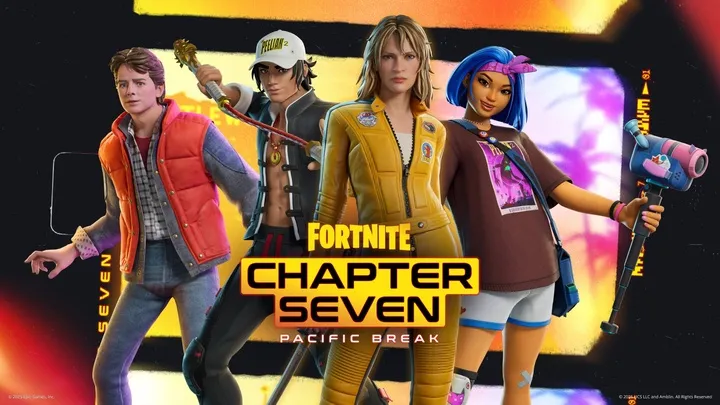
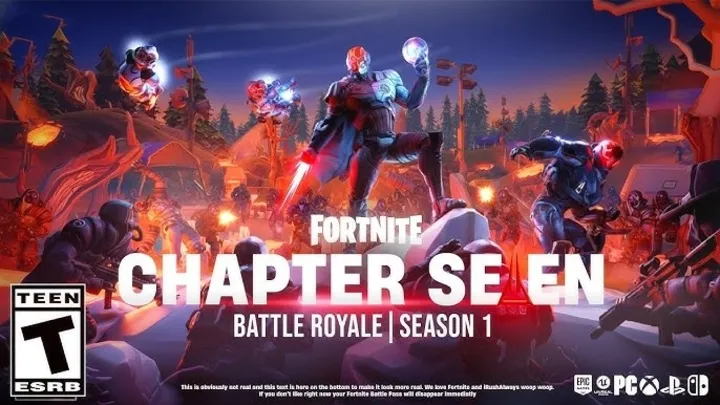
Chapter 7 of Fortnite marks a structural shift in how live-service games conceptualize time as both a narrative device and a gameplay system. Instead of presenting a clean seasonal reset, this chapter builds on accumulated instability, turning the island into a temporally fractured environment where multiple timelines overlap. The focus here is not on general features, but on a specific design axis: how temporal distortion becomes the core framework shaping player interaction, spatial logic, and long-term engagement.
1. The Prelude: Residual Instability from Chapter 6
Chapter 7 inherits unresolved anomalies from Chapter 6, particularly the fragmentation of the Zero Point. Rather than resetting the world, Epic Games preserves systemic instability, allowing it to evolve into the foundation of new mechanics. This continuity signals a deliberate design philosophy: time is cumulative, not cyclical.
Late Chapter 6 already hinted at this transition. Players experienced subtle desynchronization—NPCs behaving inconsistently, storms deviating from expected timing, and environmental glitches. These were not bugs but early-stage manifestations of a larger temporal system.
Key Carryover Systems
- Persistent Zero Point fragmentation
- NPC memory inconsistency
- Storm timing irregularities
2. Chrono-Zones: Spatializing Time Distortion
Chrono-Zones are the most visible innovation in Chapter 7. These are localized regions where time behaves differently from the rest of the map. Unlike traditional biomes, they are defined by temporal rules rather than visual identity.
Inside these zones, gameplay becomes unpredictable. Movement speed may fluctuate, projectiles can behave non-linearly, and structures may render with delay. Importantly, Chrono-Zones are dynamic—they shift locations between matches, preventing memorization and forcing adaptation.
Chrono-Zone Behaviors
- Time dilation affecting movement
- Reverse projectile trajectories
- Delayed environmental rendering
3. The Echo System: Memory as Gameplay Artifact
The Echo System transforms past player actions into active gameplay elements. Instead of static replays, the game reconstructs previous behaviors as semi-autonomous entities within future matches.
These echoes occupy the same coordinates where actions originally occurred, effectively layering multiple timelines onto a single map. This creates encounters that are not purely present-based but influenced by historical gameplay.
Implications of Echoes
- Persistent spatial memory across matches
- Encounters with past strategies
- Increased cognitive complexity
4. Temporal Weaponization: Chrono-Tech Arsenal
Weapons in Chapter 7 extend beyond conventional parameters. The Chrono-Tech Arsenal introduces tools that manipulate time itself, fundamentally altering combat dynamics.
For example, some weapons delay damage application, forcing players to think in terms of future outcomes rather than immediate feedback. Others rewind enemy positions, undoing recent movements and reshaping engagements retroactively.
Chrono-Tech Categories
- Delay-based damage systems
- Rewind mechanics
- Temporal acceleration tools
5. NPC Temporal Awareness and Narrative Drift
NPCs in Chapter 7 exhibit awareness of multiple timelines. Their dialogue references events that may not have occurred in the current match, creating a sense of narrative inconsistency.
This is a deliberate design choice. NPCs act as unreliable narrators, reflecting the instability of the world. Players must interpret fragmented information to construct a coherent understanding of events.
NPC Behavioral Changes
- Dialogue referencing alternate outcomes
- Shifting quest objectives
- Inconsistent faction alignment
6. Storm Reconfiguration: Non-Linear Safe Zones
The storm system undergoes a fundamental redesign. Instead of a predictable shrinking circle, safe zones now behave non-linearly. They may split, expand, or pause entirely.
This change disrupts established player strategies. Positioning becomes reactive rather than predictive, requiring constant reassessment of spatial dynamics.
Storm Variations
- Multi-core safe zones
- Reverse shrink phases
- Temporal pauses in storm progression
7. Architectural Decay and Reconstruction Cycles
Building mechanics now incorporate time-based decay. Structures weaken over time and may revert or collapse depending on environmental conditions.
This introduces a lifecycle model for player-built environments. Construction is no longer static; it exists within a temporal framework that influences durability and reliability.
Structure Lifecycle Phases
- Initial construction (full integrity)
- Gradual decay
- Reversion or collapse
8. Player Identity Fragmentation
Chapter 7 challenges the concept of a single player identity. Under certain conditions, players may encounter alternate versions of themselves, either as echoes or anomaly-generated duplicates.
These encounters blur the boundary between self and environment. The player becomes both participant and artifact within the game’s temporal system.
Forms of Identity Duplication
- Echo-based self encounters
- Temporal clones
- Delayed input mirroring
9. Event Architecture: Live Events as Temporal Anchors
Live events in Chapter 7 function as temporal anchors. They temporarily stabilize the timeline, resetting or modifying underlying systems.
Unlike previous chapters, these events are not purely narrative spectacles. They have mechanical consequences, influencing gameplay in subsequent matches.
Functions of Temporal Anchors
- Stabilizing Zero Point fragments
- Resetting anomaly zones
- Introducing new temporal rules
10. The Meta-Layer: Player Perception of Time
The most significant impact of Chapter 7 is psychological. By destabilizing time across multiple systems, the game forces players to abandon linear thinking.
Gameplay becomes an exercise in interpreting overlapping timelines. Memory, prediction, and adaptation merge into a single cognitive process, redefining how players engage with the game.
Perceptual Shifts
- Transition from linear to non-linear thinking
- Increased reliance on pattern recognition
- Continuous reinterpretation of events
Conclusion
Fortnite Chapter 7 represents a sophisticated evolution in live-service design, using temporal distortion as a unifying principle across mechanics and narrative. Systems like Chrono-Zones, Echoes, and temporal weaponry transform time into an active gameplay variable. This approach not only increases complexity but also reshapes player perception, turning each match into a layered interaction between past, present, and potential futures.