



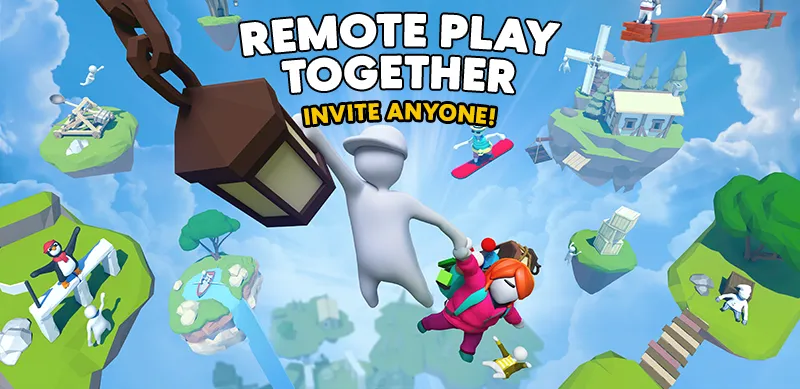
The Physics of Frustration: Deconstructing the "Drunken Ragdoll" Mechanics in Human: Fall Flat
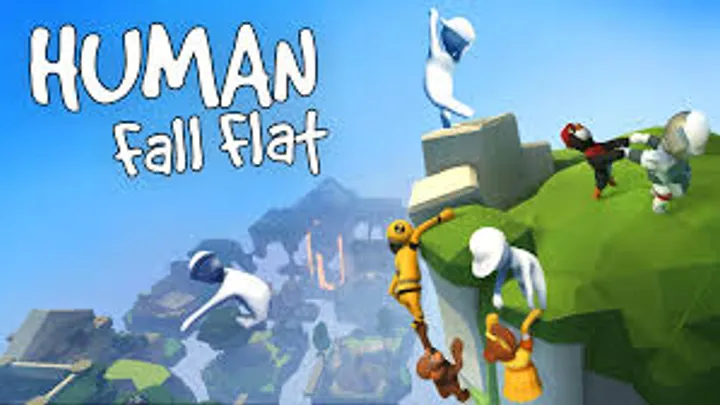
The brilliance of Human: Fall Flat lies not in its complexity, but in its deliberate, engineered incompetence. Unlike traditional platformers where the protagonist is a vessel of precision, Bob—the blank, doughy avatar—is a lesson in chaotic physics. This article explores the specific evolution and mechanical depth of the game's unique movement system, examining how "drunken ragdoll" physics transformed from a technical hurdle into a genre-defining design choice.
The Genesis of Jelly: Defining the Ragdoll Philosophy
In the early stages of development, the goal wasn't just to make a funny game; it was to simulate a body that had weight but no skeleton. The "drunken ragdoll" mechanic refers to a system where the character's limbs are governed by procedural animation rather than pre-baked movement cycles. Every step Bob takes is a calculation of friction, torque, and gravity.
The core of this philosophy rests on three pillars:
- Weight Distribution: Bob’s center of mass shifts dynamically based on arm position.
- Surface Friction: Different materials (ice, wood, stone) drastically change how the ragdoll reacts.
- Independent Limb Control: The ability to lift each arm separately creates a "climb-and-pull" loop that is entirely physics-driven.
The Contrast with Traditional Platforming
In a standard game, pressing "forward" moves the hit-box at a constant velocity. In Human: Fall Flat, pressing "forward" applies a force to Bob’s hips, which his legs then struggle to keep up with. This delay is what creates the "drunk" feeling, making the player feel like they are piloting a body rather than just moving a character.
The Interaction Paradox: Why Grabbing Everything is Hard
The primary interaction in the game is the "sticky hand" mechanic. By mapping the left and right triggers to the corresponding arms, the game demands a level of manual dexterity that feels counter-intuitive. This is the "Interaction Paradox": the most basic task (picking up a box) becomes a high-stakes physics experiment.
When a player grabs an object, they aren't just "holding" it; they are physically tethered to it. If the object is heavier than Bob, Bob moves toward the object. If Bob is grounded and the object is light, the object moves. This creates a realistic, albeit hilarious, tug-of-war between the player and the environment.
Mechanical Nuances of the Grip
- Verticality: Lifting your view while grabbing allows you to lift objects or yourself.
- Swing Momentum: Releasing one hand while swinging is the secret to clearing massive gaps.
Mastering the Swing: The Art of Momentum and Pendulums
By the time players reach the "Castle" level, the game shifts from simple puzzles to complex momentum-based navigation. The physics engine treats Bob as a pendulum. By grabbing a wall and oscillating the joystick, players can build kinetic energy.
This specific mechanic is where the game moves from "silly fun" to "high-skill ceiling." Speedrunners use this to bypass entire sections of maps. By understanding the frequency of Bob’s swing, a player can launch themselves further than the developers likely intended, turning a flaw into a feature.
The Friction Factor: Slippery Slopes and Surface Tension
Friction in Human: Fall Flat is a silent protagonist. In levels like "Ice" or "Steam," the coefficient of friction is tweaked to challenge the player's balance. On ice, the ragdoll's lack of internal structure becomes a liability, as the legs slide out from under the torso.
The game uses a complex calculation for surface tension. When Bob grabs a flat surface, the "stickiness" is binary, but the friction is variable. This means you can hold onto a wall, but if your feet can't find purchase, you will slowly slide down. This forced the community to develop the "wobble-climb" technique, where players alternate hands rapidly to overcome the downward pull of gravity.
Cooperative Chaos: Multi-Body Physics and Latency
When a second player is added, the physics engine must calculate the interaction between two ragdolls. This leads to "Multi-Body Physics Chaos." If Player A grabs Player B, their centers of mass are combined into a single, highly unstable system.
The Dynamics of Teamwork
- Human Chains: Players grabbing each other to reach distant ledges.
- Anchor Points: One player holding a heavy door while another slides through.
- The Sabotage Loop: The ease with which players can accidentally (or intentionally) pull their partners off cliffs.
The Evolution of Puzzles: Moving from Buttons to Levers
Early levels rely on simple "Box on Button" puzzles. However, as the game matured through community levels and updates, the puzzles began to focus on mechanical advantage. Levers, pulleys, and catapults require the player to use Bob’s entire body as a weight.
In the "Laboratory" level, puzzles require the player to understand electrical circuits and magnetism. Here, the ragdoll physics are used to bridge gaps—literally. The player might need to hold a wire in one hand and a socket in the other, making Bob a part of the machine. This deep integration of character physics into environmental logic is what separates the game from its imitators.
Breaking the Map: How Physics Enables Emergent Gameplay
The "specific issue" of Human: Fall Flat is that its physics are too good. Because the world is a consistent simulation, players can find "legal" ways to break the game. This is called Emergent Gameplay. If a wall is 10 feet high, the developers expect you to find a box. The physics-literate player, however, knows they can "wall-run" by manipulating the friction of Bob’s hands against the texture.
Advanced Movement Techniques
- The Long Jump: Combining a sprint, a jump, and a mid-air arm-reach.
- The Flick: Rapidly turning the camera to whip Bob’s body over an obstacle.
- The Belly Slide: Using the low friction of Bob’s torso to slide under closing gates.
Procedural Comedy: The Psychology of Failed Physics
There is a specific psychological phenomenon at play when Bob fails to climb a ledge. Because the physics are consistent, players don't blame the game; they blame their own "clumsiness." This reduces frustration and replaces it with laughter. The "issue" of the game's difficulty is masked by the visual comedy of the ragdoll's failure.
The animation system doesn't use "death animations." When Bob falls, he simply continues to simulate physics until he hits the "kill plane" or the ground. This continuity keeps the player immersed in the physical reality of the world, even when that reality is absurd.
The Workshop Revolution: Community-Driven Physics Design
The Steam Workshop transformed Human: Fall Flat from a short indie title into an endless physics sandbox. Community creators have pushed the engine to its limits, creating levels that involve functional vehicles, complex water buoyancy, and even zero-gravity environments.
This "Workshop Revolution" proved that the core movement mechanic was robust enough to handle scenarios the original creator, Tomas Sakalauskas, never envisioned. In zero-G levels, the "drunken" movement becomes a literal interpretation of astronaut maneuvering, requiring players to push off walls to gain direction.
Conclusion: The Legacy of the Wobble
Human: Fall Flat is a masterclass in making "bad" controls feel "good." By leaning into the unpredictability of ragdoll physics, the game created a platforming sub-genre focused on momentum and manual dexterity. The specific issue of Bob's instability isn't a bug—it is the very soul of the experience.
As we look toward the future of physics in gaming, Human: Fall Flat stands as a reminder that realism isn't about looking real; it's about feeling real. Even if that reality involves a faceless marshmallow man falling off a floating island because he couldn't quite grasp a wooden plank.